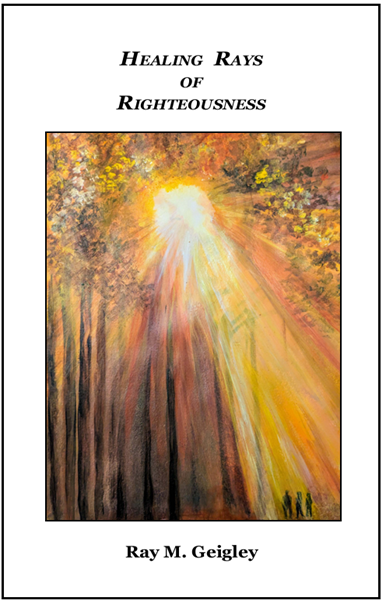
"But for you who revere my name, the sun of righteousness will rise with healing in its rays. And you will go out and frolic like well-fed calves." – Malachi 4:2

A truth that I have learned to greatly appreciate through personal experience and Bible study is this; God is not our protector against trouble, but he “is our refuge and strength, an ever-present help in trouble.”And so, Psalm 46 has become my “go to” psalm when life becomes difficult and uncertain.

This truth is undergirded by the three affirmations of faith found in these verses. And these three affirmations of faith have always encouraged and strengthened me in times of worship and praise to God as well as in tough times of petitioning God’s help.

Affirmation One – I will not fear because God is my refuge and strength. (vv.1-3).

Earlier in Psalm 9:9-10, the psalmist said, “The Lord is a refuge for the oppressed, a stronghold in times of trouble. Those who know your name trust in you, for you, Lord, have never forsaken those who seek you.” In times of crisis, we turn to whom or what we trust. I choose to trust God’s love.

Affirmation Two I will not faint because I have a river. (vv. 4-

God provides a river of resources in his city during threatening times of despair and evil attack.          “God is within her, she will not fall; God will help her at break of day.” (v.5).

 All nature depends on hidden resources. The trees send their roots deep into the earth to find hidden streams of water. Likewise, we Christians need to sink our spiritual roots into God’s stream of resources to keep us from fainting in despair and defeat. I choose to trust God’s love.

Affirmation Three – I will not fret because I see the rainbow. (vv.8-11).

What is that rainbow? It is the revelation of God’s sovereignty and majestic glory over all the earth. It is seeing God exalted and overarching all storms of uncertainty and tragedies. The rainbow declares it to be so. There is no need to fret, because “The Lord Almighty is with us; the God of Jacob is our fortress.”

This truth became very real to my family during one of our return home trips after visiting family in Phoenix, Arizona. On an early Monday morning we left Phoenix in a VW Camper van that we agreed to drive to the New York seaport to be shipped to Africa.

We enjoyed the long drive through beautiful Salt River Canyon and then by late afternoon, stormy winds were blowing as we entered New Mexico. While eating supper in a restaurant, a very windy rainstorm delayed our return to vehicle and traveling. After the storm had passed and we entered onto the interstate a bright, beautiful double rainbow appeared ahead of us.

The evening soon grew darker, and I discovered that the vehicle had no headlights. Racing against the deepening darkness we were unsuccessful in finding a garage that was still open and so stayed the night in a motel. This was the beginning of troubles and frustrations.

The next afternoon, Tuesday, the engine suddenly stopped working and we had to be towed to Amarillo, Texas. By then it was late evening, and we had to stay the night a short distance from the garage.

Wednesday was a day of delay and disappointment, and finally a diagnosis on Thursday. The van needed a new engine. This had to be ordered from Houston and should arrive on Monday and take about two days to install. The seeming lack of urgency by the garage service department frustrated me.

However, a phone call to the Mennonite church in Amarillo, connected us to the pastor who just happened to own a motel. The pastor and his wife graciously provided a room, meals, and a car for us to enjoy our stay while waiting for the van to be repaired, which took several days longer then promised.

Finally, after repeated delays, we anxiously started on our way home even though it was already early evening and raining. Imagine our reassuring amazement when, as we left the city limits of Amarillo, traveling east, a beautiful rainbow appeared in front of us.

In that moment God’s promise of presence, protection, and provision – a promise that speaks of peace amid trouble, was revealed to us in a very personal way. Yes, the rainbow stands guard over the storm. It is God’s name written in the sky for all to see and proclaims “God with us” inviting us to renew our faith and trust in his presence and power.

We really felt blessed, believing God placed those rainbows at the beginning and ending of our nine-day journey through trouble and blessing as an experiential teaching for our family about God’s enduring love and faithfulness.

And so, when I read “Be still, and know that I am God” in verse 10, I now hear, “Relax. I am God and I can manage the situation.”  This I believe, but must confess that in tough situations, fear and impatience crowds out faith and I need to keep reminding myself that God is not our protector against trouble, but he “is our refuge and strength, an ever-present help in trouble.”  

<><><><><> 

Ray M. Geigley – “Healing Rays of Righteousness” www.geigler13.wordpress.com – 7/23/25

During the past several years I have shared mid-week meditations with you with prayers that my writing would encourage you toward experiencing God’s healing rays of love, joy, and peace in your life.

During the past year I selected fifty-eight of the more recent meditations and have published them in a book titled, “Healing Rays of Righteousness” I am offering the book to you for $17.00 per copy, plus $3.00 mailing costs. Send order with check to Ray Geigley, 403 Benjamin Drive, Chambersburg, PA 17201.

<><><><> 

I pray that the selected meditations contained in this book will in some small way, significantly awaken and encourage your spirit and soul toward God’s healing rays of love, joy, and peace in your life. Whatever may be your present circumstance, lean into Jesus who invites us, “Come to me, all you who are weary and burdened, and I will give your rest. Take my yoke upon you and learn from me, for I am gentle and humble in heart, and you will find rest for your souls.” (Mt. 11:28-29). <><><> 

This may be the ideal gift for your family, friends, co-worker, and neighbor. May God graciously bless your today! Ray M. Geigley

Excerpted from INTRODUCTION

After retiring from active ministry, I was encouraged to write a weekly meditation as a continuing ministry. Needing to choose a title for my writings, and with deep appreciation for my name and its mission, I searched for a scriptural verse that would possibly link my name with my purpose for writing and best define the focus of my writing ministry.

That is when I surprisingly re-discovered Malachi 4:2. With this reference to the sun of righteousness rising with healing in its rays, I readily thought of the rising morning sun, promising healing light, warmth, and hope. With that thought, I quickly realized that this promised healing hope was what had shaped and motivated my ministry as a pastor and chaplain for the past 58 years. Thus, I chose the title, “Healing Rays of Righteousness” for my weekly meditations.

Apostle John’s pen is bubbling with joy as he writes, urging his readers to open their minds and consider how deeply God loves and cares for them. “See what great love the Father has lavished on us, that we should be called children of God! And that is what we are!”  (1 John 3:1).

 He then paints in the background. This is how God showed his love among us; He sent his one and only Son into the world that we might live through him. This is love; not that we loved God, but that he loved us and sent his Son as an atoning sacrifice for our sins. (1 John 4:9-10).

I remember reading the story of a well-known speaker who began his seminar presentation by holding up a new twenty-dollar bill. In the room of two hundred persons, he asked, “Who would like this twenty-dollar bill?”  Hands were slowly raised up. He continued, “I am going to give this twenty-dollar bill to one of you but first let me do this.”  He then proceeded to crumple up the bill. He then asked, “Who still wants it?”  Again, the hands went up in the air. “Well,” he asked, “what if I do this?”  And dropping the crumpled bill to the floor, he ground it beneath the heel of his shoe, until the bill was not only crumpled but also dirty and torn. “Now who still wants it?” he asked. And again, the hands went up.

“My friends,” he said, “you have all just learned a very valuable lesson. No matter what I did to the money, you still wanted it because it did not decrease in value. It was still worth twenty dollars. Many times, in our lives we are dropped, crumpled, and ground into the dirt by the decisions we make and the circumstances that come our way. We feel as though we are worthless. But no matter what happened or will happen, you will never lose your value in the eyes of those who love you. You are special and never forget it.”

I agree with this speaker and am convinced that the biblical record of God’s LOVE relationship with his people consistently confirms this message. You and I were created and born being wonderfully great, unique, and full of potential. And now, years later, we are even greater, more unique, and still full of wonder-filled value and potential.

Some of the most profound teachings regarding God’s love is found in the third and fourth chapters of John’s first letter. In verses eight and sixteen of the fourth chapter, John tells us that “God is love.” 

Those three little words get to the heart of what John believed about God. They tell us that God is pure self-giving love, and that God cares deeply about you and me and covets our love relationship with himself. The amazing character of God is love and his greatest desire is that we be in a daily love relationship with him as our loving Father, caring Mother, and glorious King. Yes, I said it. You are a child of the King, loved and cared for in the family of God, the King of kings.

Just how deep is God’s love for us, you ask? Read those verses from John’s first letter again. Ponder the remarkable good news that amazing, gracious, endless love is at the very core of God’s character and at the very center of God’s heart.

In his book Experiencing God, Henry T. Blackaby writes, “God is far more interested in a love relationship with you then He is in what you can do for Him.”

At this very moment, we are children of God, who is LOVE. And, most amazing, there is nothing that will ever be able to prevent God from continuing to deeply love us. The apostle Paul believed this and writes, “For I am convinced that neither death nor life, neither angels nor demons, neither the present nor the future, nor any powers, neither height nor depth, nor anything else in all creation, will be able to separate us from the love of God that is in Christ Jesus our Lord.” (Romans 8:38-39).

Even though I have had experiences that caused me to question this truth, I now am convinced that God will never, can never stop loving us. He created us in our mother’s womb and breathed life and love into you and me. We are his amazing and glorious creation, filled with eternal purpose and potential.

And so, no matter what happened in your past or may happen in your tomorrows, you will never lose your value in the eyes of your Heavenly Father who dearly and forever loves you. You are special and never forget it. You are loved, today and always! Amen!

Together we sing with the psalmist; “Your unfailing love, O Lord, is as vast as the heavens; your faithfulness reaches beyond the clouds. Your righteousness is like the mighty mountains, your justice like the ocean depths. You care for people and animals alike, O Lord. How precious is your unfailing love, O God! All humanity finds shelter in the shadow of your wings. You feed them from the abundance of your own house, letting them drink from your river of delights. For you are the fountain of life, the light by which we see.”  (Psalm 36:5-9, NLT).

<><><><><> 

Ray M. Geigley – “Healing Rays of Righteousness” www.geigler13.wordpress.com – 7/08/25

Bring Us Together

In her book, Bring Us Together, Marjorie Holmes prays, “Oh, God, we go through life so lonely, needing what other people can give us, yet ashamed to show that need. And other people go through life so lonely, hungering for what it would be such a joy for us to give. Dear God, please bring us together, the people who need each other, who can help each other, and would so enjoy each other.”

Is this not the prayer of the human heart, searching for the security, freedom, love, and joy that only life in community with others can provide? It is the continuing prayer of my heart, and I hope it is also your prayer. We do know that it is the prayer of Jesus’ heart, for he prayed “I have given them the glory that you gave me that they may be one as we are one – I in them and you in me – so that they may be brought to complete unity. Then the world will know that you sent me and have loved them even as you have loved me.” (John 17:22-23).

When I reflect on my younger years, I gratefully remember the many enriching experiences of community that I felt within my church and neighborhood. But today, such experiences of community have been diminished in our nation. This loss provides fertile soil for the seeds of distrust, disrespect, and disregard for others to grow, which in turn leads to multiple fears and much violence. Dear God, please bring us together.”

One of the most contagious and deadly personality choices in Western culture is individualism, which diminishes the value or need for community. Individualism is the sinful characteristic of a human heart that is going away from God and his glorious intent for every human being. Not only does individualism blind a person toward seeing a godly perspective of life, but it also magnifies fears and increases isolation, and isolation breeds selfishness and greed.

The biblical record tells us that God purposefully created every human heart with the need to belong, that is, to be accepted, included, and cared for in community with other caring human beings. When Jesus was asked what the greatest commandment is, he answered by saying, “You shall love the Lord your God with all your heart, and with all your soul, and with all your mind. This is the greatest and first commandment. And the second is like it; You shall love your neighbor as yourself.”

The first Christian community, following the Pentecost event, caught this vision and became a fellowship of sharing at all levels of life, spiritual, social, and economic, which included shelter, clothing, and food. We could say that they “walked their gospel talk” with a public display of loving others as themselves with a sincere and generous “I care for you” concern. Jesus made it clear in his teachings that obedience to the second greatest commandment would be the basic observable identity of his followers. Dear God, please bring us together.”

The second commandment is also the most important value of personal freedom. And I am deeply troubled that many Americans, who call themselves Christian, have forgotten or willfully debunked the biblical concept of freedom which is a communal experience and not individualistic. The biblical idea of responsibility and concern for the other, be it family, co-worker, or neighbor is sadly divorced from their concept of personal freedom. And the consequences of this selfish right to freedom are evident all around us every day in various devilish ways.

The freedom we have as a follower of Jesus Christ, is not a lawless, irresponsible anarchy, but a trustworthy, self-disciplined, responsible freedom of loving and serving others. This was and is God’s intention and purpose in breathing his Spirit and physical life into us at our birth. This was Jesus’ intention and purpose in going to the cross for us. “It is for freedom that Christ has set us free.”  And this is the Holy Spirit’s intention and purpose in taking up residence and abiding within us. “Now the Lord is the Spirit, and where the Spirit of the Lord is, there is freedom.”

Yes, being a follower of Jesus is to experience an authentic, liberating freedom of living in community where love, joy, and peace; that is, where caring/sharing, thankfulness/generosity, and respect/security are equally experienced. Let us give serious thought to this as we celebrate our national freedom during the coming weeks. Dear God, please bring us together.” Amen!

<><><><><> 

Ray M. Geigley – “Healing Rays of Righteousness” www.geigler13.wordpress.com – June 18, 2025

In a culture of selfish individualism and gratification, respect for human dignity has been discarded as worthless baggage. When it comes to the communal need of affirming and protecting the dignity of others, our society has lost its heart and soul. And sadly, even those who claim to be Christian are finding it acceptable to cruelly “trash” those they do not like or disagree with.

Political conversations have deteriorated into sickening trash-talking about opponents and making the possibility of learning “truthful facts” about a person or situation is almost non-existent. Unfortunately, this childish and prejudiced name-calling has become the dark character of American culture in both our secular and religious arenas. Most distressing to me, is that such behavior is displayed and encouraged at the highest level of our current national government leaders. Shame, shame, shame!

You ask, why am I distressed and why does human dignity demand respect? Listen to what God says about human origin and dignity. Like when God is about to send Jeremiah as a prophet into a culture that had lost all reverence for human life. They were corrupting themselves with the most flagrant disregard for human dignity. To encourage and commission Jeremiah as his prophet, God says to him, “Before I formed you in the womb I knew you, before you were born I set you apart; I appointed you as a prophet to the nations.”  (Jeremiah 1:5) 

Our small, earthbound minds imagine our conception as only a biological event. But this verse forces us to rethink the deeper truths regarding the origin and dignity of human life. If God, as sovereign Creator, is present in the process of human conception, then we must accept the truth that the value of human life is wrapped in the wonderous glory of an eternal relationship with God.

The Psalmist knew this to be true and praises God, “For you created my inmost being; you knit me together in my mother’s womb. I praise you because I am fearfully and wonderfully made; your works are wonderful, I know that full well.” (Psalm 139:13-14).

And there is more. Listen again to what God said to Jeremiah. “Before I formed you in the womb I knew you, before you were born I set you apart.”  I hear God saying that our conception and birth are not our real beginning of existence, nor will death be the end of our existence.

Wow! What a wondrous thought to ponder and live by. Before the day and moment of our being conceived, God knew us and dignified us by calling us into existence. God names you and me in his mind and dignifies each of us with a special purpose, plan, and destiny.

Before our mothers lovingly cradled us in their arms, God wrapped his greater arms around us and held us close, instilling in each of us a life-purpose uniquely designed for us. That truth is awesome, and the wondrous thought infuses me with God’s glorious and eternal dignity.

The psalmist acknowledges this truth in his praise to God, “Your eyes saw my unformed body; all the days ordained for me were written in your book before one of them came to be. How precious to me are your thoughts, God! How vast is the sum of them!”  (Ps. 139:16-17).

But even though we believe this truth regarding God’s dignifying us with purpose and destiny, many who call themselves Christian find it difficult to believe that he did the same for every human being on this earth. Yes, I repeat, what God did in bringing you and me into existence, he did for every human being on this earth.

It is imperative that we let this truth permeate into the deepest recesses of our mind and heart. Otherwise, it becomes easy to debate and decide about others based on their usefulness to us, or whether we feel comfortable in their presence.

It is true that many people do not live up to the dignity God instilled in them at their birth. Many do not live up to God’s purpose, plan, and potential. There are many reasons for such failure, but the saddest is when it is because they did not receive the affirmation, dignity and respect needed to experience and grow into wholesome personhood. Shame, shame, shame!

Yes, I am convinced that our communities, nation, and world would be amazingly transformed if the Christian community made sincere efforts to reclaim God’s gifting of human dignity for all, regardless of their race, religion, politics, or nationality. May God help us to do so!

<><><><><> 

Ray M. Geigley – “Healing Rays of Righteousness” – www.geigler13.wordpress.com – 6/11/25

This past Sunday we acknowledged and celebrated the high school and college graduates in our church. It was a joyful and important event of congratulations and affirmations of their individual giftings. And it reminded me of the apostle Paul’s words to the Corinthian church regarding giftedness.

“Gifted”is a marvelous word, and “giftedness” was an important concept to Paul and the early church. However, Paul’s understanding of “giftedness” is quite different from that of modern educational theory, which separates out from the mainstream those students who demonstrate greater intelligence as “gifted” persons.

The heart of Paul’s message to the Corinthian church is in his first letter, chapter 12, verses four to seven, when he writes that the Holy Spirit gives differing gifts to everyone, and to each person in the church. “There are different kinds of gifts, but the same Spirit distributes them. There are different kinds of service, but the same Lord. There are different kinds of working, but in all of them and in everyone it is the same God at work. Now to each one the manifestation of the Spirit is given for the common good.” (NIV).Nobody is left out! The Holy Spirit is working in everyonefor the common good.

I believe that God does not merely tolerate diversity but deeply values and loves it. Look at his numerous creative works around you on earth and in space. I am also convinced that God’s idea of unity is not the marshaled unity of a marching army, but rather the musical unity of a 100-member orchestra where each singer and player contribute a different tone or note in beautiful harmony with the whole.

However, gifts must be developed. That is our responsibility. We should not waste energy comparing ourselves unfavorably or better than others. Our task is to develop our particular gifts for use in God’s service for the common good. And yes, it takes all the gifts of everyone, finely tuned and working together, to correctly understand and accomplish God’s grand work in our community and world. Each one of us is gifted with greatness for serving others good, not for pursuing status above others.

Followers of Jesus are each given gifts that are to be developed and used in the context of community. And being Christian, we celebrate our differences. While we are not the same, each one of us is important to the whole. We need each other. There is no such thing as “going it alone” in the church. There is no such thing as “just Jesus and me” in the biblical view of church. We complement each other, challenge each other, comfort each other, and communicate with each other. What affects one member of the church is felt by all members. We are family, that is, the family of God.

One of the important meanings of “Holy Communion” is that we gather around the Lord’s Supper acknowledging that we are uniquely created and gifted individuals that have been united as one family of siblings into the household of God by the sacrificial death and resurrection of Jesus Christ.

Communion means “to experience another” – “to have a close union with another.” Communion celebrates Christ’s living presence with us in community. God, speaking to us through Scripture, repeatedly calls us out of separateness and into community, out of proud independence and into humble interdependence.

Charles Osgood tells the story of two elderly ladies who lived in the same skilled nursing facility. Each had suffered a stroke. Margaret’s stroke had left her left side paralyzed, while Ruth’s stroke had damaged her right side.

This was a sad and unfortunate experience for both women because they both had been accomplished pianists. Both women had given up hope of ever playing the piano again – that is, until the Activities Director of the nursing facility encouraged them to play solo pieces together with Margaret playing with her right hand and Ruth playing with her left hand.

What a wonderful picture of the Christian church working together in unity and common purpose. No one person can do it alone. The journey through life is too difficult and too precarious to attempt “going it alone.” Be assured, we “desperately” need each other.

God has made us for community and gifted us uniquely for the common good. Let us celebrate our oneness, our unity, our communion in Jesus Christ as we partake of the bread and cup Jesus offers us, and as we congratulate and appreciate each other’s giftings. May it be so!

<><><><><> 

Ray M. Geigley – “Healing Rays of Righteousness” www.geigler13.wordpress.com – 6/04/25

PEACE BE WITH YOU

Suddenly, without invitation and expectation, Jesus appears, and standing among his fear-filled disciples says, “Peace be with you!”  And one week later when Thomas is present with the group, Jesus repeats his sudden appearance and greeting, “Peace be with you!”  (John 20:19-23).

Each time I read this passage, the words “Peace be with you,” seem to leap out of the text and give pause to my rambling thoughts. Three times he speaks these words to the disciples, and I ask myself, “Why does the resurrected Jesus repeatedly say this each time he appears to his disciples?”

Then I remember that long before Jesus’ birth, the prophet, Isaiah, told us that Jesus’ life and ministry would be focused on being the Prince of Peace. “For to us a son is given, and the government will be on his shoulders. And he will be called Wonderful Counselor, Mighty God, Everlasting Father, Prince of Peace. Of the greatness of his government and peace there will be no end.”  (Isaiah 9:6-7a).

Then at his birth, the angels shouted their praise with these words, “Glory to God in the highest, and on earth peace to men on whom his favor rests.” (Luke 2:14). Then during his earthly ministry, Jesus told the woman who anointed his feet with her tears and the woman who was healed of her hemorrhage to “go in peace” (Luke 7:50; 8:48). Also, during the last week before his death, he reminded his disciples of his imminent death and departure, and comforts them by saying, “Peace I leave with you; (John 14:27).

From this brief review and pondering, I conclude that this visit by the resurrected Jesus with his disciples was no superficial, neighborly visit, but rather a significant reminder and reassurance that he will always be with them and empowering them. And his repeated words, “Peace be with you” were much more than asimple familiar greeting. Indeed, he was giving them a very needed and precious gift.

Furthermore, this gift of peace was and is a companion gift with the other God-given gifts of love and joy. These gracious gifts flow from the grand gift of salvation that Jesus won for them and us on the cross of crucifixion, as his final few words declared the gift finished/completed. (John 19:30).

When he showed his disciples the nail prints in his hands and the great wound in his side, as evidence of his love for them, they “were overjoyed.”  And again, Jesus said, “Peace be with you! As the Father has sent me, I am sending you.” (John 20:21).

Jesus’ resurrection, with its certifying, guaranteed hope of life beyond the grave, is wondrous news. But the uncertainties of daily life, with its doubts and difficulties, remain. And when painful reality sets in, we can easily become anxious, fearful, and despairingly conclude that we are alone in the darkness.

 At such times we need to listen and lean into Jesus’ words of comfort that he spoke to his disciples. “Peace I leave with you; my peace I give you. I do not give to you as the world gives. Do not let your hearts be troubled and do not be afraid.” (John 14:27).   

His peace is different because it is always given by him in person. It is the reassurance of his presence that takes away our many doubts and fears and fills life with peace. It was fear that brought the disciples together behind locked doors. Then Jesus enters the room to give them the only thing that can take their fear away, his living presence, and says, “Peace be with you.”

The “good news” is that the calming, powerful living presence of the risen Christ can and does come into our shuttered rooms and dark valleys with his gracious gift of peace, saying, “Peace be with you!”

For that reason, we can believe and declare with the psalmist, “Even though I walk through the darkest valley, I will fear no evil, for you are with me; your rod and your staff, they comfort me.” (Psalm 23:4). AMEN!

<><><><><> 

Ray M. Geigley – “Healing Rays of Righteousness” www.geigler13.wordpress.com – 5/14/25

Being overwhelmed with fear and grief, by the events of the past few weeks, since entering Jerusalem for the Passover, the disciples of Jesus are physically, emotionally, and spiritually exhausted. Bewildered and confused, they struggle with feelings of guilt because of their cowardly desertion of Jesus during his arrest, trial, and crucifixion.

Their hopes of a new Kingdom, a new day for the people of God, were shattered. Even though they rejoiced in seeing Jesus resurrected and again alive, they could not comprehend how he could transform what they saw as a lost cause, into a new future of God’s Kingdom on earth.

According to the disciple, John, he and six others were together, back home in their neighborhood by the Sea of Galilee. One evening, Simon Peter said, “I’m going out to fish, … and they said, “We’ll go with you.  So they went out and got into the boat, but that night they caught nothing.” (John 21:3).

The decision to go fishing was a decision that came out of the need to alleviate their feelings of sad defeat and despair. And to go fishing was a return to something they knew, understood, and felt comfortable doing. 

But after fishing all night, which is the best time to catch fish, they are feeling even more defeated. They caught nothing, not even one small fish. They were expert fishermen who knew the lake in every detail and were skilled in catching fish. It had been their vocation, their livelihood, but on this night, they caught nothing, not even one small fish.

It was at this extremely difficult moment in their lives, that Jesus comes and standing on the shore, calls out to them, “Friends, haven’t you any fish?” “No,” they answered. He said, “Throw you net on the right side of the boat and you will find some.” (Jn. 21:5-6).

And, wow, a tremendous fishing success follows their obedience to Jesus’ instruction. It was the same lake, the same boat, the same net, and the same crew, but a new obedience turned failure into success so great that “they were unable to haul the net in because of the large number of fish.”  An important lesson of encouragement to us in our times of failure.

Even though Jesus had breakfast already prepared for these hungry men, he asks them to contribute to the breakfast from their big catch of fish. And then with gentleness and love, Jesus invites them to “Come and have breakfast.” (Jn. 21:12).

As Jesus graciously and lovingly shares his food with them, they experience his forgiveness. Their fellowship with him is restored and their hearts reassured that he loves them. Moreover, their team unity and love for one another is restored. They again sense that they are working together under the authority of Jesus. And their physical, emotional, and spiritual hungers are nourished and satisfied.

During the early dawn of a new day, Jesus comes to his exhausted disciples with love and forgiveness, and turns their sadness into gladness, their despair into hope, and their mourning into mission.

It is said that we could view this time by the Sea of Galilee as a time of LOVE, even as we view Pentecost as a time of POWER. I can agree with this perspective because we can learn from the biblical scriptures that in God’s expectations and training of Jesus followers to be his witnesses, enabling power is always secondary to compelling love. However, I confess that even though I know that when God’s love fills and possesses us, it becomes the source of our greatest good, our greatest happiness, and our greatest usefulness as God’s witness and evangelist of good news, I still find it easier to pray for power to do things for God, than it is to pray for greater love for God and all others.

More than anything else, we need love! The world needs love! In the early morning seaside breakfast, love is on the menu and infuses Jesus’ every word and act in his effort to restore relationship, while 07love in the relationship between himself and the disciples, as well as between disciple and disciple.

For the same purpose, Jesus comes to each one of us and invites us to “Come and have breakfast.”  Start your day with me and I will feed and nourish your deepest hungers of the day. I will turn your nets of empty dilemmas and concerns into full nets of blessings. With love, I will unite you with my church team in doing my work of love in the world. And I will always love you. “Come and have breakfast.”

<><><><><> 

Ray M. Geigley – “Healing Rays of Righteousness” www.geigler13.wordpress.com – 5/07/25

Joyously Pondering Easter

Today is the Wednesday after Easter Sunday, when we celebrated the glorious truth that the story of Jesus did not end with his death; that Jesus’ resurrection from the grave of crucifixion death confirmed his triumphant victory over Satan and death; and that his glorious resurrection confirmed his promise to us of an eternal new day and new life. Hallelujah! Praise be to God!

And as in previous years, “Holy week” seemed to come and go so quickly. Reflecting on my “now what” feeling, I wonder if I am being motivated to enter into Christ’s glorious resurrection event more fully for the purpose of gaining a greater appreciation for its impact on my life.

In reading all four Gospel accounts of Jesus’ resurrection, it seems that none of the disciples were on board with Jesus and prepared to understand and joyously celebrate their Lord’s resurrection from the dead. Instead, they were overtaken by surprise, fear, and doubt.

The story tells of women bringing spices to anoint Jesus’ dead body. On the way, they wonder who will roll the stone away for them and then are perplexed to find the stone rolled away and the body gone. They do not know what to make of the empty tomb and neatly folded grave clothes. Standing there perplexed, a voice from behind them asks, “Why do you look for the living among the dead?” (Lk. 24:5), and “Trembling and bewildered, they fled from the tomb.” (Mk. 16:8), to go and tell all the other disciples what had happened to them. They were not anticipating and prepared to joyously celebrate Easter.

John tells us that even after seeing the empty tomb, the disciples “still did not understand from Scripture that Jesus had to rise from the dead.” (Jn. 20:9). John also tells us that Mary Magdalene weeps with grief while the resurrected Lord stands nearby. (Jn. 20:11-18). They were not anticipating and prepared to joyously celebrate Easter.

I believe all four Gospel writers would have us understand that Easter joy is real, even for those not prepared for it. Easter is for Peter, too paralyzed by guilt and fear to take it all in. Easter is for Philip, who because of doubt finds it hard to believe without concrete evidence. Easter is for John, who believes in Jesus’ resurrection but needs time to process what difference it makes. Easter is for Mary, blinded by tearful grief, mourning her loss, while her Lord stands behind her.

Yes, prepared or not, Easter’s celebration is for each one of us. Our retail culture does not give us much time to joyously ponder Easter’s glorious life-changing event. Much like an impatient waiter whisking our plate away before we are finished eating, our culture tries to quickly move us on from Easter’s life-changing truths and joyous praise.

But I remind myself and you, that we still have the fifty days of the Easter season remaining until Pentecost; a time for us to linger by the empty tomb in thought and wonder. Days to weep. Days to pray. Days to ponder. Days to rejoice and give witness to the Lord, who stands behind us, healing our past; and before us, beckoning us to follow him into His promised future.
He is alive! Jesus Christ has conquered death. “Do not be afraid. I am the First and the Last. I am the Living One; I was dead, and now look, I am alive for ever and ever! And I hold the keys of death and Hades.!” (Rev. 1:17).

You may find these prophetic words from Isaiah 25:6-8 to be helpful meditation; “On this mountain the Lord Almighty will prepare a feast of rich food for all peoples, a banquet of aged wine – the best of meats and the finest wines. On this mountain he will destroy the shroud that enfolds all peoples, the sheet that covers all nations, he will swallow up death forever. The Sovereign Lord will wipe away the tears from all faces; he will remove his people’s disgrace from all the earth. The Lord has spoken.”

Because Jesus has “destroyed death” (2 Tim. 1:10; 1 Cor. 15:26), we are able to face uncertain tomorrows with singing, “Because He lives I can face tomorrow, because He lives all fear is gone; because I know He holds the future and life is worth the living – just because He lives.”

<><><><><>

Ray M. Geigley – “Healing Rays of Righteousness” – http://www.geigler13.wordpress.com – 4/23/25

Good Friday Darkness

On Easter morning, many Christians will joyfully sing of Christ’s glorious resurrection as though the cross and crucifixion was nothing more than a temporary inconvenience for Jesus; similar to a trip to the dentist, painful but endurable and over quickly.

In their story of Good Friday, both Mark and Luke record that “At noon, darkness came over the whole land until three in the afternoon.” (Mk. 15:33).Jesus had hung on the cross for three hours, and then at noon darkness came over the whole land. And for three more painful hours, Jesus suffered in the dense darkness that blocked out the mid-day sun.

From the larger story, we know that this darkness was more than just a fact of the day’s appearance. It was also the description of the deep darkness of abandonment that was overwhelming Jesus’ body, soul, and spirit.

The physical torture of crucifixion, with its excruciating pain, was designed by the governing authorities to send waves of darkness and fear coursing through the victim’s body. But for Jesus there was also the painful darkness of being ridiculed, abandoned, and rejected by His own people, including His dear friends and disciples.

And added to this darkness was the deeper darkness of taking on and forgiving the world’s sin, reconciling the world to himself. It was this darkness of the world’s sin that separated him from his heavenly Father, who “is light: and in (whom) is no darkness at all.” (1 John 1:5).

Pause a moment and try to imagine the story. The heavens went dark and silent, covering the world in darkness, and he could not see nor hear his Father. Jesus felt utterly alone, with nobody near who could fully understand and empathize with him and his suffering? Nobody! And we hear Jesus verbalize his agony when he cried out, “My God, my God, why have you forsaken me?”  But even though Jesus felt forsaken by all, he reaffirmed his relationship with the Father by crying out “My God, my God.”

So where was God on that terrible dark Friday? Betrayed by Judas, denied by Peter, and deserted by his friends and disciples, did God also abandon him? Really? It is true that God would not stand between Jesus and sin’s darkness, holding off the painful suffering and protecting him from death, which is the judgement of sin.

However, I am convinced that God was very much there, as loving, grieving Father, silently watching and agonizing with his Son as he made the ultimate sacrifice of his life for the sins of the world. He was there expectingly waiting, and when Jesus loudly cried “Finished” and died, Father God burst forth with earth-shaking, rock-splitting, brilliant light that completely tore the Temple curtain in two from top to bottom, causing the centurion guard to testify, “Surely this man was the Son of God!” (Mk. 15:38-39).

For me, the good news of Good Friday is that the God of light is also God in the darkness. Yes, God is in the darkness of His people’s pain and suffering. No, God does not stand between us and pain, holding it off, bringing us only good news, but God does stand, sit, and even hangs with us on our cross of painful, frightening darkness. However, this comforting, encouraging truth is most often only seen in the rear-view mirror of living.

For those of us who choose not to make a quick leap from the wondrous revealing light of Palm Sunday to the glorious resurrection light of Easter, the discovery that God is very much present in the awful suffering darkness of Good Friday is most encouraging.

The Scriptures repeatedly reassure us that when we feel most alone, God is with us in the darkness. As the psalmist declares in Psalm 139 – “Where can I go from your Spirit? Where can I flee from your presence? …if I make my bed in depths, you are there. …even the darkness will not be dark to you;” And again in Psalm 23 – “Even though I walk through the darkest valley, I will fear no evil, for you are with me, your rod and your staff, they comfort me.”  Thank you, Jesus!

<><><><><> 

Ray M. Geigley – “Healing Rays of Righteousness” www.geigler13.wordpress.com – 4/16/25